Picking a Chinese Steel Framework manufacturer as a global buyer? Honestly, it's both a technical call and a commercial one. You need a partner who can handle design, keep fabrication under control, and actually knows how to export without drama. Names like China State Construction Engineering Corporation, Shanghai Metal Corporation, and Qingdao Xinguangzheng Steel Structure Co., Ltd. tend to pop up in searches. But being visible doesn't mean they're the right fit. Check factory capacity, welding procedures, coating systems, and recent project references—real ones. A credible supplier should be able to walk you through their process in plain terms. Engineers should talk about load paths, connection details, corrosion exposure, fire requirements, and local building codes—not just hand you a brochure. Production evidence matters, too. Ask for material certs, dimensional inspection records, weld testing, and packing lists you can trace. A steel column can look dead simple, but one small connection mistake can hold up erection on site. That tiny detail? It matters. If they serve overseas projects, communication discipline is a big deal. Clear drawings, revision control, and realistic lead times save everyone from costly confusion between design and site teams. This guide compares leading China Steel Framework manufacturers by experience, technical depth, quality systems, and buyer support. It also looks at how they react when drawings change or site conditions don't match the plan. No supplier is perfect. Some have strong engineering but weak after-sales coverage. Others quote fast but explain almost nothing. That gap is worth paying attention to. Global buyers should ask for comparable quotes and inspect the evidence before signing. Independent audits can add confidence, especially for warehouses, industrial buildings, and multi-storey structures. The goal isn't the cheapest price. It's a solution that's buildable, well documented, and durable—one that performs beyond the catalog.
Steel Framework Manufacturing in China: Products, Scope, and 2023 Market Scale
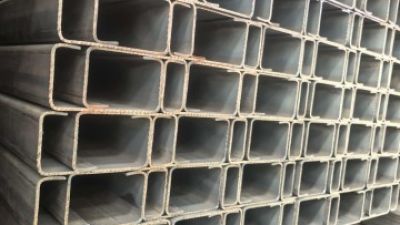
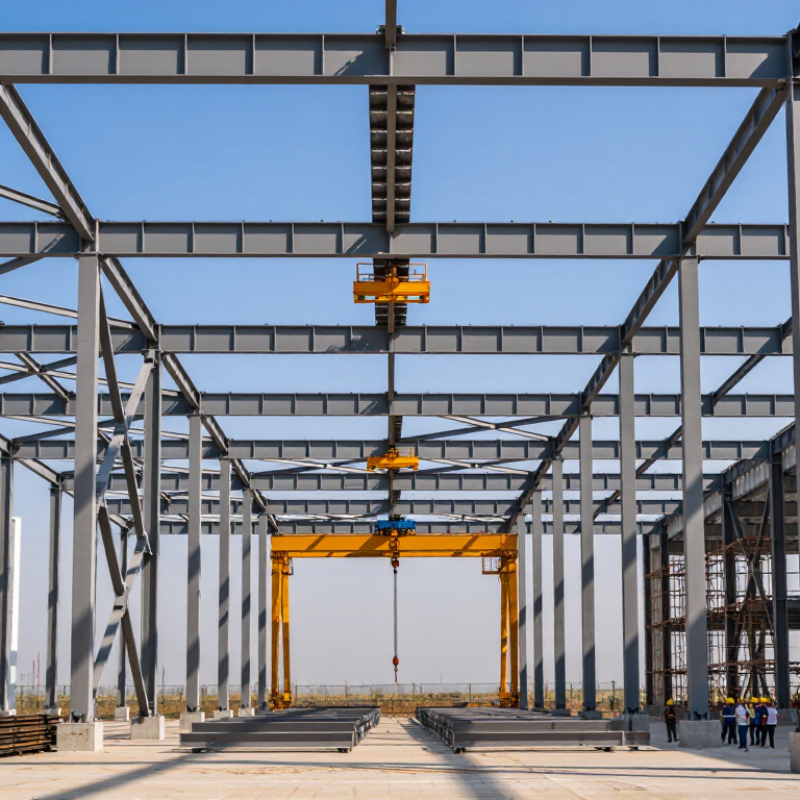
China’s steel framework sector covers warehouse portals, industrial platforms, bridge components, stair systems, and modular building frames. Common products include H-beams, box columns, trusses, purlins, base plates, and welded connections. Some suppliers also process Carbon Steel Seamless Steel Pipe for tubular members, although it is not a universal frame solution.
The scale is substantial. The World Steel Association reported China’s crude steel output at 1,019.1 million tonnes in 2023, representing about 54% of global production. China’s National Bureau of Statistics recorded approximately 1.362 billion tonnes of finished steel output that year. These figures show manufacturing capacity, not the dedicated value of steel frameworks. That distinction matters. Framework statistics remain fragmented across construction, fabrication, and equipment categories.
Experienced factories usually combine CNC cutting, robotic or manual welding, shot blasting, coating, and dimensional inspection. Export projects may require mill certificates, weld procedure records, ultrasonic testing, and traceable packing lists. EN 1090, Eurocode, ASTM, and AISC-based specifications often shape procurement, depending on the destination. Site conditions still decide many details. Coastal projects need stronger corrosion protection. Long-span roofs demand tighter deflection control. A low quotation can hide transport, erection, or coating limitations. Buyers should compare drawings, tolerances, steel grades, and inspection scope—not only tonnes and price.
China’s 2023 Crude Steel Output Reached 1.019 Billion Tonnes (World Steel)
China Top Steel Framework Manufacturers for Global Buyers
China produced 1.019 billion tonnes of crude steel in 2023, according to World Steel. This scale supports a deep supply network for steel framework projects worldwide. It also creates a practical advantage: manufacturers can source plates, beams, tubes, and connection parts with shorter production cycles. However, high output alone does not prove reliable workmanship.
Experienced buyers examine the complete process. A capable manufacturer should review structural drawings, confirm steel grades, and prepare a clear cutting schedule. Welding procedures need qualified operators and traceable inspection records. For a 12-meter beam, small dimensional errors can affect site alignment. Surface preparation also matters. Coating thickness, edge treatment, and packing conditions should appear in quality documents.
Ask for mill certificates, inspection reports, welding records, and measurable tolerances. Independent inspection can add confidence before shipment. Factory visits are useful, but they are not enough. A clean workshop may still hide weak documentation. That point deserves attention. Production capacity should match the project’s real schedule, not only a sales promise. Buyers should also check loading plans, container limits, and local installation requirements.
Steel scale is impressive. Control is harder. Reliable cooperation depends on evidence, communication, and repeated checks. Some suppliers may offer lower prices by reducing inspection steps. The saving can disappear during installation. A careful manufacturer explains limitations openly and corrects drawings when details remain unclear. That honesty may feel slower, but it protects the structure and the buyer’s long-term investment.
China Top Steel Framework Manufacturers for Global Buyers - China’s 2023 Crude Steel Output Reached 1.019 Billion Tonnes (World Steel)
Market reference data and buyer-oriented specifications for steel framework sourcing
| Data Category |
Metric / Specification |
Verified Data or Common Requirement |
Buyer Relevance |
Reference |
| National Steel Output |
China crude steel production, 2023 |
1,019.1 million tonnes |
Indicates the scale of China’s upstream steel supply base. |
World Steel Association, 2023 statistics |
| Global Steel Output |
World crude steel production, 2023 |
1,888.2 million tonnes |
Provides a benchmark for China’s position in the global steel market. |
World Steel Association, 2023 statistics |
| Global Share |
China’s approximate share of world crude steel output |
Approximately 54.0% |
Reflects the depth of China’s raw-material and fabrication ecosystem. |
Calculated from World Steel Association 2023 data |
| Typical Framework Products |
Primary structural members |
Columns, beams, rafters, trusses, bracing members and portal frames |
Defines the main fabricated components to be included in a quotation. |
Common structural-steel engineering practice |
| Material Grades |
Common international grade references |
ASTM A36, ASTM A572 Grade 50, EN 10025 S275 and EN 10025 S355 |
The specified grade affects strength, weldability, design calculations and price. |
ASTM International; EN 10025 standard series |
| Design Codes |
Frequently specified structural design frameworks |
Eurocodes, AISC 360 and GB 50017 |
The design code determines loads, member sizing, connections and compliance documents. |
European Committee for Standardization; AISC; Chinese national standard system |
| Connection Methods |
Factory and site connections |
High-strength bolted connections, welded connections and bolted splice joints |
Connection details influence installation time, inspection requirements and transport planning. |
Common international steel-construction practice |
| Surface Protection |
Corrosion-control options |
Shop primer, multi-coat paint systems and hot-dip galvanizing |
The selected system should match exposure conditions, service life and maintenance access. |
ISO 12944; ISO 1461 |
| Quality Documentation |
Typical inspection and traceability records |
Mill test certificates, dimensional inspection reports, welding records, coating reports and packing lists |
Documents support material verification, project acceptance and import clearance. |
Common project quality-control requirements |
| Shipping Configuration |
Export delivery format |
Mark-numbered components with shop drawings, erection plans and itemized packing lists |
Clear identification reduces assembly errors and facilitates customs and site handling. |
Standard practice for prefabricated steel-frame exports |
| Buyer Evaluation Criteria |
Key non-brand selection factors |
Code compliance, engineering capability, welding quality, coating system, inspection control, delivery capacity and export experience |
Supports objective comparison without relying on company or brand names. |
International procurement and structural-steel project practice |
Data note: Production figures refer to crude steel output in 2023. Product categories, standards and buyer requirements are general industry references and should be confirmed against the project’s governing code, drawings, contract specifications and local regulations.
How Chinese Suppliers Differ by Capacity, Structure Type, and Project Scale
China’s steel framework manufacturers differ sharply in capacity, structure type, and project scale. The World Steel Association reported China’s crude steel output at approximately 1.005 billion tonnes in 2024. This supports a deep supply base, but output volume alone does not prove fabrication quality.
Large fabricators usually handle high-tonnage warehouses, stadium roofs, bridges, and multi-building industrial projects. They often operate automated cutting lines, robotic welding cells, large paint halls, and cranes above 20 tonnes. Mid-sized suppliers may perform better on customized workshops, mezzanines, agricultural buildings, and faster engineering revisions. Their advantage is flexibility, not unlimited capacity. Small fabricators can suit simple portal frames, but buyers should verify subcontracting practices carefully.
Structure type also changes supplier suitability. Portal frames need efficient member production and accurate connection detailing. Space frames require stronger three-dimensional modeling and tighter node tolerances. Heavy trusses demand controlled welding procedures, dimensional inspection, and reliable transport planning. The 2024 World Steel Association data shows China remains the dominant steel-producing country, yet steel availability is only one purchasing factor. Factory audits, welding qualification records, material traceability, and inspection reports matter more than impressive catalogs. A spreadsheet can look convincing. It cannot reveal warped columns or delayed drawings. Buyers should match annual tonnage, equipment limits, certification experience, and site conditions with the actual project brief. That step is often missed.
Factory Quality Metrics: Welding, CNC Accuracy, Coating, and ISO 9001 Controls
China Top Steel Framework Manufacturers for Global Buyers
Factory quality is visible in the welding bay, not only in a polished catalog. Experienced manufacturers record weld size, visual defects, and repair rates for every production batch. Critical joints receive ultrasonic or magnetic particle testing when the design requires it. Inspectors also check preheating, interpass temperature, and welder qualifications.
CNC accuracy affects how steel members meet on site. Reliable factories verify hole positions, plate dimensions, and cutting tolerances with calibrated tools. A practical target may be ±1 mm for selected machined features, though project specifications can differ. Coating control needs equal discipline. Surface preparation is checked before painting, while dry-film thickness is measured at several points. Salt contamination and roughness should not be ignored.
ISO 9001 controls add structure through approved drawings, material certificates, inspection plans, and nonconformance records. Traceability should connect each steel batch to its finished member.
However, quality systems are not flawless. A factory may discover uneven coating near corners or a weld requiring rework. The important question is whether staff identify, document, and correct the issue before shipment. Buyers should review calibration dates, sample inspection reports, and corrective-action evidence. Clear communication often reveals more than impressive equipment.
Export Standards Explained: GB/T, EN 1090, CE Marking, and ISO 3834
For global steel framework buyers, export compliance starts with the project destination. GB/T standards define Chinese requirements for materials, dimensions, testing, and fabrication. EN 1090 controls the execution of structural steel and aluminium components in European projects. CE marking may be required when the product falls under applicable harmonised rules. It also needs a Declaration of Performance and factory production control.
ISO 3834 focuses on welding quality. It assesses procedures, personnel, equipment, inspection, and traceability. In practice, buyers should request welding procedure specifications, welder qualifications, inspection records, and material certificates. A Seamless Carbon Steel Pipe may still require separate product documentation. Do not treat one certificate as universal approval. That mistake remains common.
The World Steel Association reported about 1.89 billion tonnes of crude steel production worldwide in 2023. Such scale makes consistent documentation more important, not less. European Commission guidance connects EN 1090 compliance with documented factory controls and performance declarations. ISO survey data also shows ISO 9001 remains widely adopted across manufacturing, although quality certification alone does not prove welding compliance. The boundary can be confusing.
Tips: Confirm the governing standard before quotation. Match steel grades carefully. Check mill certificates against heat numbers. Ask for independent inspection when risk is high. A cheaper file can hide expensive rework. Reflect on this before signing.
Buyer Due Diligence: Capacity, Certifications, QA Records, and References
For global buyers, supplier due diligence should begin with verified capacity, not polished brochures.
The World Steel Association reported 1,892.2 million tonnes of crude steel production in 2023. Large output does not automatically mean reliable fabrication. Ask for monthly production records, workshop photographs, equipment lists, and current order loads. Check whether cutting, welding, blasting, and coating are performed in-house or outsourced.
Certifications require careful reading.
An ISO 9001 certificate confirms a quality management system, but it does not guarantee strong structural fabrication. The ISO Survey of Management System Certifications recorded more than 1.26 million ISO 9001 certificates worldwide in 2022. That figure shows popularity, not product quality. Request certificate scopes, expiry dates, audit findings, welding procedure qualifications, material traceability, and calibration records. For projects using Mild Steel Seamless Pipe, review heat numbers, mill certificates, dimensional reports, and hydrostatic test records. Small gaps matter.
QA records should connect each beam, plate, or pipe to a purchase order and inspection stage.
Require weld maps, non-destructive testing results, coating readings, and corrective-action reports. A buyer should contact at least three recent clients directly, preferably on comparable structures. Ask about delivery delays, documentation accuracy, and how defects were handled. One practical weakness remains common: buyers often verify documents but rarely inspect production flow. A short independent factory audit may reveal crowded storage, mixed materials, or unfinished rework that certificates conceal.
Cost and Delivery Factors: Tonnage, Coating, Freight, and Lead Time
For global buyers, steel framework pricing starts with tonnage, not a simple price per ton. A small weight change can affect fabrication, loading, and truck capacity. Experienced manufacturers usually request drawings, steel grades, connection details, and delivery location before quoting. A project using Seamless Steel Pipe may also need separate handling because pipe packing differs from beams and plates. Confirm the bill of materials early. Missing one accessory can disturb the whole budget.
Coating requirements create another cost layer. Basic shop primer is cheaper than hot-dip galvanizing or a multi-coat system. Surface preparation, coating thickness, drying time, and inspection all matter. Coastal projects often need stronger corrosion protection. However, excessive coating specifications can add cost without improving service life. The right choice depends on exposure, maintenance access, and design life. Ask for coating records, inspection methods, and repair procedures.
Freight depends on cargo volume, weight distribution, port distance, and seasonal capacity. A lower factory price may lose its advantage after inland transport and handling fees. Lead time should include drawing approval, material purchasing, fabrication, coating, packing, and export preparation. In practice, schedules are often too optimistic. Our early estimate was too neat. Weather, revised drawings, or delayed approvals can add days. Buyers should request a realistic production schedule, weekly progress updates, and a clear list of information needed before fabrication begins.
This indicative benchmark shows how project scale can affect steel framework purchasing costs and delivery time. Costs are shown in USD per metric tonne and include base steel fabrication, protective coating, and international freight assumptions. Lead time is shown in weeks.
Assumptions: standard carbon-steel framework, typical export packaging, conventional coating systems, non-expedited production, and consolidated ocean freight. Actual quotations vary by design complexity, coating specification, destination, currency, and shipping conditions.
China C/Z Purlin Supplier: Quality Cold-Formed Steel Profiles for Reliable Construction Projects
# China C/Z Purlin Supplier: Quality Cold-Formed Steel Profiles for Reliable Construction Projects
C/Z purlins are premium cold-formed, thin-walled steel profiles designed to provide efficient roof and wall support in modern steel structure buildings. According to the World Steel Association’s *World Steel in Figures 2024*, global crude steel production reached approximately 1.89 billion tonnes in 2023, highlighting the continuing importance of steel in infrastructure and industrial development. With an annual production capacity of 50,000 tonnes, our China-based factory supplies C and Z purlins in a broad range of sizes, thicknesses, and configurations for dependable project integration.
Manufactured through precision cold-forming, these profiles combine structural strength with reduced weight, helping contractors simplify installation and optimize material usage. They are widely applied in warehouses, industrial facilities, logistics centers, markets, agricultural buildings, and stadiums. The *2023 Global Status Report for Buildings and Construction* from UNEP and the Global Alliance for Buildings and Construction notes that the sector accounts for about 34% of global energy- and process-related carbon dioxide emissions, increasing demand for efficient, durable construction systems. Consistent dimensional accuracy, reliable mechanical performance, and prompt delivery make these C/Z purlins suitable for customized roof and wall support solutions across diverse construction requirements.
FAQS
Common products include H-beams, box columns, trusses, purlins, base plates, and welded connections. Some suppliers also process tubular members. The exact range varies by factory.
China produced about 1,019.1 million tonnes of crude steel in 2023. Finished steel output reached roughly 1.362 billion tonnes. These figures show capacity, not framework sales alone. That difference matters.
Send approved drawings, steel grades, connection details, quantities, and the delivery location. Include coating requirements and inspection expectations. A missing base plate can disrupt the budget. Small omissions become expensive.
Buyers may request material certificates, welding procedure records, welder qualifications, and inspection reports. Ultrasonic testing records may suit higher-risk connections. Packing lists should identify members clearly. One certificate is not universal approval.
Shop primer usually costs less than galvanizing or a multi-layer coating system. Surface preparation, coating thickness, drying time, and repairs affect the final price. Coastal structures often need stronger corrosion protection. More coating is not always better.
The schedule includes drawing approval, material purchasing, fabrication, coating, packing, and export preparation. Freight and port handling add further time. Weather can interfere. Our early estimate might be too neat.
Compare steel grades, member sizes, tolerances, coating systems, inspection scope, and packing details. Do not compare tonnes and unit price alone. A low quote may exclude transport or erection work. Cheap can become costly.
No. Standards describe requirements, while actual quality depends on factory controls and documented inspections. Check traceability from heat numbers to finished members. Review welding records and dimensional reports. Paperwork can still hide gaps.
Conclusion
China’s Steel Framework manufacturing sector serves a wide range of global construction, industrial, energy, and infrastructure projects. In 2023, China produced approximately 1.019 billion tonnes of crude steel, supporting a large and diverse supply base. Manufacturers vary significantly in production capacity, structural design expertise, and ability to handle small custom orders or large engineered projects. Buyers can evaluate factory performance through welding quality, CNC processing accuracy, surface preparation, coating systems, and documented ISO 9001 quality controls.
For international projects, suppliers may need to demonstrate compliance with GB/T requirements, EN 1090 execution standards, CE marking procedures, and ISO 3834 welding controls, depending on the destination market. Effective due diligence should include reviewing production capacity, certifications, inspection records, quality assurance procedures, and comparable project references. Final costs and delivery schedules are influenced by total tonnage, steel grades, connection design, coating specifications, packaging, freight conditions, and production lead time. A structured supplier assessment helps buyers balance quality, compliance, cost, and delivery reliability.