Leave Your Message
0%

China’s GI Rectangular Tube market plays a big role in stuff like construction, infrastructure projects, agriculture, and heavy industry. But, when folks are shopping around, they realize it’s not just about finding the lowest price. Instead, they need to compare small details—things like how consistent the coating is, the tolerances on the dimensions, the quality of the welds, how they’re packed up, and how quickly they can get the product shipped out. Those tiny differences really matter. A rough zinc coating or a crooked tube end can turn into a pain during fabrication or installation.

This guide walks you through ten Chinese manufacturers, using real-world purchasing factors instead of just claims that one is better than the rest. We look at their product ranges, info on their production, quality documents, export experience, and how responsive they are. These bits of info help buyers come up with focused questions and figure out whether a supplier is a good fit for their project. Just knowing a factory’s capacity isn’t enough—you should also ask for recent inspection reports, clear specs, and samples where it makes sense.

To be upfront, the following quote is written by an editor, not a real person. It’s from what we call “Evan Lin,” a made-up sourcing pro for GI Rectangular Tubes, just to give you an idea: “A dependable tube isn’t just about the coating; it’s about how consistently it matches the drawings.” Good point, right? Still, no single checklist can replace doing your own homework. Make sure to double-check the steel grade, zinc-coating specs, dimensions, and inspection methods before placing an order. Then, compare suppliers using the same standards—it takes some time, but it’s worth it. This can also help you spot things that a glossy product page might hide. Think of this as just a starting point to help you dig deeper, rather than a full technical review for your project.
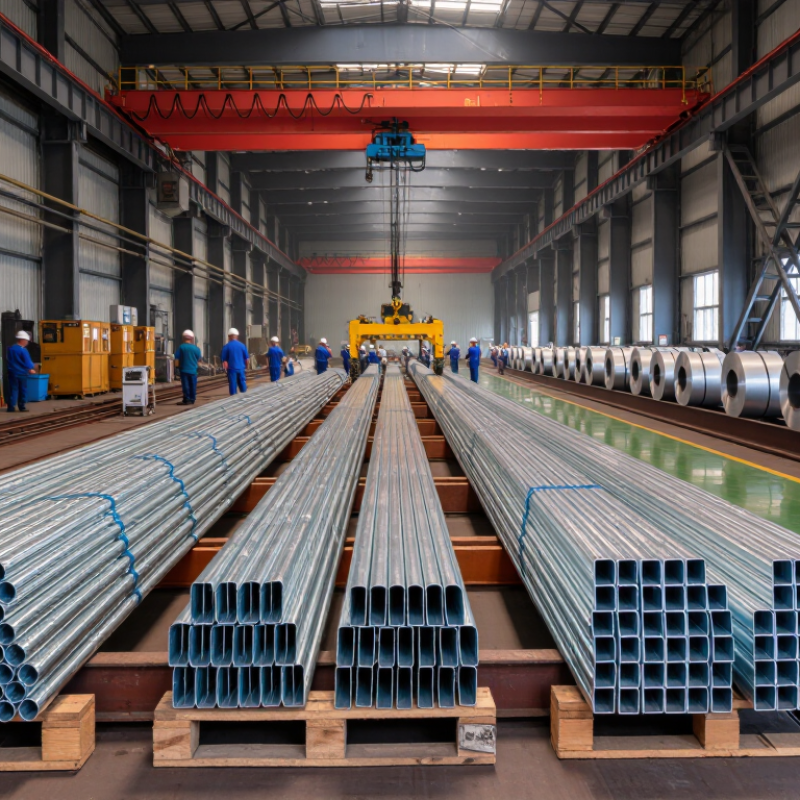
China Top 10 GI Rectangular Tube Manufacturers

What Are GI Rectangular Tubes and How Are They Made?

GI rectangular tubes are hollow steel sections protected by a zinc coating. “GI” commonly means galvanized iron, though many products use steel as the base metal. Their flat faces and right-angle corners make them useful for frames, supports, gates, and light structural work. The zinc layer helps slow rust, especially where moisture reaches the surface. It is not damage-proof.

Production starts with steel strip. Rollers gradually bend it into a rectangular shape, and the edges are joined by a continuous weld. Sizing rolls refine the width and corner profile. Galvanizing may happen before forming, using zinc-coated strip, or after welding through hot-dip coating. Each route has trade-offs: cut edges and weld areas may need extra attention. The label can be confusing, so confirm the coating method rather than relying on “GI” alone.

Tips: For a Tube Rectangular section, check wall thickness, outside dimensions, and coating details on the specification sheet. Look closely at corners and cut ends for bare spots or rough buildup. Small details matter. If the tube will be exposed outdoors, consider drainage and touch-up needs too; even a good coating cannot prevent every corrosion problem.

China’s GI Rectangular Tube Industry at a Glance

China’s GI Rectangular Tube industry draws on one of the world’s largest steel supply chains. The World Steel Association’s World Steel in Figures 2024 reports that China produced 1,019.1 million tonnes of crude steel in 2023, out of 1,892.2 million tonnes worldwide. These figures show the scale of the raw-material base, not the market size of galvanized rectangular tubes. That distinction matters.

GI rectangular tubes are typically formed from steel strip or sections and protected with a zinc coating. Buyers should check the coating method, wall thickness, dimensions, and test documentation against the intended use. A clean, even coating is useful, but appearance alone cannot confirm coating mass or structural performance. Ask for measurable inspection results. Small gaps in traceability can create real problems later.

Tips: Confirm whether the quoted thickness includes the zinc layer. Request coating and dimensional records for the supplied batch, then inspect cut ends and corners. Specs can look clear on paper, yet site conditions may expose assumptions that deserve a second look.

Key Standards and Specifications for GI Rectangular Tubes

For GI rectangular tubes, the specification should identify the steel grade, dimensions, wall thickness, and galvanizing method. ASTM A500 covers cold-formed welded and seamless carbon-steel structural tubing; ASTM A123/A123M addresses zinc coatings on fabricated steel products. They serve different purposes. A purchase order should state both the tube standard and the coating requirement, rather than treating “GI” as a complete specification. Details matter.

China produced 1,019.1 million tonnes of crude steel in 2023, out of 1,892.2 million tonnes worldwide, according to the World Steel Association’s Steel Statistical Yearbook 2024. That scale makes clear why documented grades and inspection criteria matter, but output figures do not guarantee tube quality. For each Rectangular Carbon Tube, verify outside dimensions, corner geometry, wall-thickness tolerance, weld integrity, and coating thickness against the agreed standard. GB/T 6728 covers structural hollow-section dimensions, while GB/T 13912 specifies hot-dip galvanized coating requirements. Ask whether galvanizing occurs before or after forming; the process can affect coverage at cut edges and corners. A caliper, coating-thickness gauge, and mill test certificate help check the details. Yet paperwork can miss local bare spots, so sample inspection is still worthwhile.

Key Standards and Specifications for GI Rectangular Tubes

Minimum specified yield strength of selected structural tube grades

Values shown are minimum specified yield strengths: ASTM A500 Grade B, 315 MPa; ASTM A500 Grade C, 345 MPa; ASTM A1085, 345 MPa; and EN 10219 S355J2H, 355 MPa for wall thicknesses up to 16 mm. These are base-steel mechanical requirements, not zinc-coating thickness requirements. Galvanizing requirements are specified separately, for example in ASTM A123/A123M or EN ISO 1461.

How to Evaluate GI Rectangular Tube Manufacturers

Evaluating GI rectangular tube manufacturers starts with evidence, not catalog claims. Check dimensions, wall thickness, corner shape, weld continuity, and zinc coating mass against your project specification. Ask for batch-traceable mill certificates and recent independent test reports. A polished sample helps, but it cannot represent every production run.

Capacity alone proves little. World Steel Association’s World Steel in Figures 2024 reports 1,892.2 million tonnes of crude steel produced worldwide in 2023. The OECD’s 2024 steelmaking capacity outlook projects global capacity at about 2.5 billion tonnes by 2026. In a crowded supply market, request factory audit records, production schedules, and evidence that stated tolerances hold across batches. Inspect cut ends and welded corners; thin or uneven zinc coverage can be easy to miss.

Match tests to the intended environment and applicable product standard. Salt-spray results may help compare samples, but they do not reliably predict service life on their own. Request coating-thickness readings from several points, dimensional inspection records, and clear details on sampling methods. Then verify that the quoted grade, section size, and coating specification appear consistently on the certificate and order. Small paperwork gaps matter. I have seen sourcing checks focus too heavily on price; that is understandable, but not enough.

Profiles of China’s Top 10 GI Rectangular Tube Manufacturers

Profiles of China’s top ten GI rectangular tube manufacturers are most useful when they explain production, not just capacity. Buyers should look for details on hot-dip galvanizing, zinc-coating specifications, wall-thickness tolerances, and available dimensions. Ask whether tubes are galvanized before or after forming; the process can affect weld seams and corrosion protection. Details matter.

Factory profiles can show how suppliers inspect incoming Mild Steel Rectangular Tube, manage forming lines, and test finished sections. Useful evidence includes mill test documents, coating-thickness readings, dimensional checks, and sample inspection reports. Photographs of bundled tubes, marked lengths, and protected ends offer practical clues about handling and export packing. A polished profile is not proof. Request recent records and confirm that quoted specifications match the order.

Comparing ten manufacturers means weighing more than price: lead time, minimum order quantity, customization, and communication all affect delivery. Profiles should state whether products suit frames, greenhouse structures, furniture, or general fabrication, rather than promise universal performance. Check the listed standard and coating mass against the project specification, then clarify tolerances in writing. Some details may be missing. That is worth noting. Supplier rankings can change as equipment, sourcing, and service conditions change.

China Top 10 GI Rectangular Tube Manufacturers - Profiles of China’s Top 10 GI Rectangular Tube Manufacturers

Note: Company names and brands are omitted. The numbered entries below are illustrative product-profile categories, not verified company rankings or claims about specific manufacturers. Actual dimensions, grades, coatings, standards, and availability vary by supplier and order; confirm them with the manufacturer.

Profile Typical Product Focus Rectangular Tube Details Common Galvanizing Route Material and Standard Considerations Buyer Checks
Profile 01 General construction and fabrication Welded hollow sections; dimensions and wall thickness are order-specific Pre-galvanized strip or hot-dip galvanizing after tube fabrication Confirm the specified steel grade and applicable product standard, such as GB/T 6728 where relevant Request dimensional tolerances, coating details, and inspection records
Profile 02 Greenhouse and agricultural structures Light-to-medium structural tube configurations, subject to the project design Pre-galvanized strip is commonly specified for formed tube products Grade, tube size, and coating requirements should be stated on the purchase specification Check cut-end protection, bundle labeling, and suitability for the exposure environment
Profile 03 Fencing, gates, and outdoor frames Tube sections selected to suit frame geometry and load requirements Pre-galvanized or post-fabrication hot-dip galvanized, depending on the specification Corrosion protection depends on coating route, coating condition, and service environment Clarify whether coating is required on the internal and external surfaces
Profile 04 Furniture, shelving, and display frames Formed sections for appearance-sensitive or light structural applications Pre-galvanized material may be used where the finished surface requirements allow Specify surface condition, corner profile, length, and permissible dimensional variation Ask for sample inspection criteria and packaging that prevents transit damage
Profile 05 Solar mounting and equipment support frames Structural tube selected according to engineering loads and connection design Pre-galvanized or hot-dip galvanized after fabrication, as specified for the project The required grade, coating specification, and design standard depend on project conditions Verify traceability, coating documentation, and compatibility with the connection system
Profile 06 Light industrial equipment and machine frames Welded rectangular sections with sizes selected for the intended structural duty Coating route is chosen based on fabrication sequence and corrosion requirements GB/T 6728 or another specified standard may be relevant; confirm scope and edition Confirm straightness, squareness, weld quality, and machining requirements
Profile 07 Building components and secondary framing Cold-formed hollow sections for applications defined by the structural design Pre-galvanized strip or separately galvanized finished sections Specify the governing standard; EN 10219 or GB/T 6728 may apply to relevant hollow sections Check certificates against the contract, including grade and test requirements
Profile 08 Roadside, utility, and general outdoor structures Tube configuration and wall thickness must be determined by the application and design Post-fabrication hot-dip galvanizing can be specified for completed components Coating requirements should reference the applicable project or coating standard Discuss venting and drainage details before galvanizing closed or fabricated sections
Profile 09 Custom cut-to-length and fabrication-ready supply Standard or project-defined lengths, with processing subject to supplier capability Coating and any post-coating cutting requirements should be agreed in advance Material grade and acceptance criteria should be documented in the order Confirm length tolerance, end condition, labeling, and responsibility for cut-edge treatment
Profile 10 Export-oriented, specification-driven orders Dimensions, tolerances, and packing are defined by the agreed purchase specification Galvanizing route and coating acceptance criteria are contract-specific ASTM A500, EN 10219, GB/T 6728, or another standard may be specified where applicable; confirm product scope Review inspection documents, bundle marking, shipping protection, and destination-market requirements

Applications and Sourcing Considerations for GI Rectangular Tubes

GI rectangular tubes suit applications that need a clean profile and practical stiffness. Common uses include greenhouse frames, storage racks, light-duty gates, and interior partitions. Their flat faces make bolted connections and panel mounting straightforward. They are not automatically suitable for every load.

Match the tube size and wall thickness to the span, connection details, and expected loads. A 40-by-60-millimeter section can behave differently with a thinner wall, even when the outside dimensions match. Ask suppliers to state dimensions, thickness tolerance, tube length, and galvanizing method in writing. Check whether cutting or welding will expose bare steel, then specify appropriate repair or corrosion protection. Small details matter.

For sourcing, request a recent inspection record and clarify how coating consistency is checked. Inspect a sample for dents, rough seams, and uneven zinc coverage; use measuring tools to confirm dimensions on delivery. Store bundles off wet ground and keep them ventilated. Condensation can leave marks. A tidy datasheet helps, but it cannot prove every batch is identical. One useful question is often overlooked: can the supplier maintain the same specification across repeat orders?

FAQS

What does GI mean in rectangular tubes?

GI tubes are steel sections protected by a zinc coating. It helps limit corrosion, but does not make the tube maintenance-free.

Which product details should buyers verify?

Confirm dimensions, wall thickness, corner shape, weld continuity, coating method, and zinc coating mass. Ask whether quoted thickness includes zinc. Easy to miss.

Can appearance confirm coating quality?

No. A smooth, even surface is useful, but cannot prove coating mass or structural performance. Request readings from several points.

What documents help assess a supplier?

Request batch-traceable mill certificates, recent independent test reports, factory audit records, and dimensional inspection records. Check that paperwork matches the order. Gaps matter.

Are salt-spray results enough to predict service life?

No. Salt-spray tests can compare samples, but do not reliably predict service life alone. Match testing to the intended environment and product standard.

Where are GI rectangular tubes commonly used?

Common uses include greenhouse frames, storage racks, light-duty gates, and interior partitions. Flat faces simplify bolted connections and panel mounting. Not for every load.

How should tube size and wall thickness be selected?

Match them to the span, connections, and expected loads. A 40-by-60-millimeter tube with a thinner wall may behave differently. Outside size is not enough.

What should buyers inspect on delivery and during storage?

Check for dents, rough seams, and uneven zinc coverage; measure the dimensions. Keep bundles off wet ground and ventilated. Condensation can leave marks.

What sourcing question is often overlooked?

Ask whether the same specification can be maintained across repeat orders. A clean sample cannot represent every batch. I would still double-check.

Conclusion

This article explains what a Gi Rectangular Tube is, how the steel base is formed and protected with a zinc coating, and which production steps influence its shape, surface, and consistency. It also offers an overview of China’s manufacturing sector and introduces the standards and specifications buyers may need to consider, including dimensions, wall thickness, coating requirements, and inspection criteria.

A practical guide to evaluating manufacturers follows, focusing on production capability, quality control, documentation, communication, and delivery reliability rather than brand names. The article also outlines common uses in construction, infrastructure, equipment, and other structural applications. By considering operating conditions, required specifications, packaging, logistics, and after-sales support, readers can compare suppliers more effectively and make sourcing decisions that suit their project needs.

Isabella

Isabella

Isabella is a dedicated marketing professional with a profound expertise in steel products, specializing in the manufacturing, processing, and distribution of H-beams, angle steels, steel pipes, and other essential steel structures like solar brackets. With a passion for the construction and......
Previous China Top 10 Galvanized Steel Sheet Suppliers?