
What is the difference between Carbon Steel Pipe and Seamless Pipe?
In the international steel trade, many buyers and distributors frequently ask: "What exactly is the difference between seamless steel pipes and carbon steel pipes?" In fact, this is a classic example of conceptual confusion: "seamless steel pipe" refers to the manufacturing process of steel pipes, whereas "carbon steel pipe" denotes its chemical composition; the two concepts are not mutually exclusive but share common characteristics—many seamless steel pipes available on the market are actually made from carbon steel.
Core Definitions and Material Analysis
-
Classified by material, carbon steel pipes are alloy pipes primarily composed of iron and carbon, with a carbon content typically ranging from 0.05% to 2.0%, and containing small amounts of elements such as silicon, manganese, sulfur, and phosphorus. Depending on the manufacturing process, they can be either seamless pipes (produced by piercing and rolling solid steel billets) or welded pipes (formed by bending and welding steel plates). Common carbon steel grades include 10#, 20#, 45# (Chinese national standards), as well as ASTM A106 and A53 (American standards).
-
Classified by manufacturing process, seamless pipe refers to steel pipes with no welds on their surface. It is produced through a complex series of processes—including heating, piercing, hot rolling, or cold drawing—on a single piece of round steel or ingot. Due to the absence of welds, seamless pipes can be manufactured from various materials such as carbon steel, stainless steel (e.g., 304, 316L), or alloy steels (e.g., chromium-molybdenum steel).
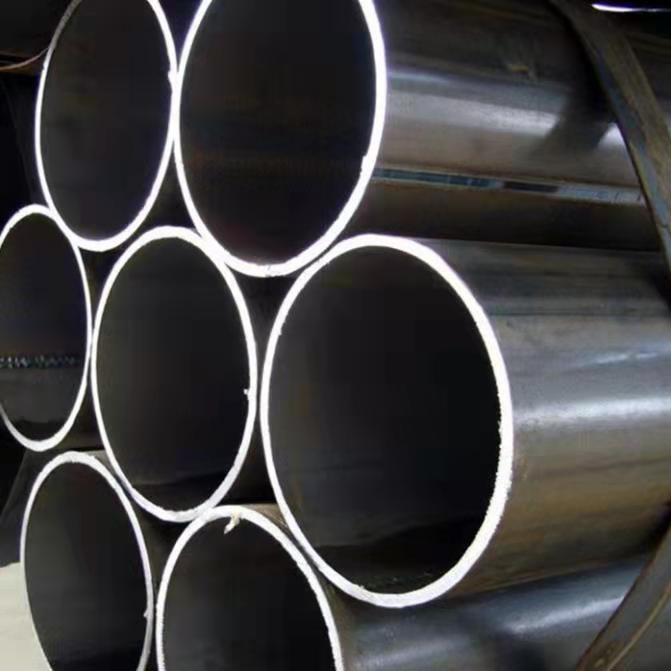
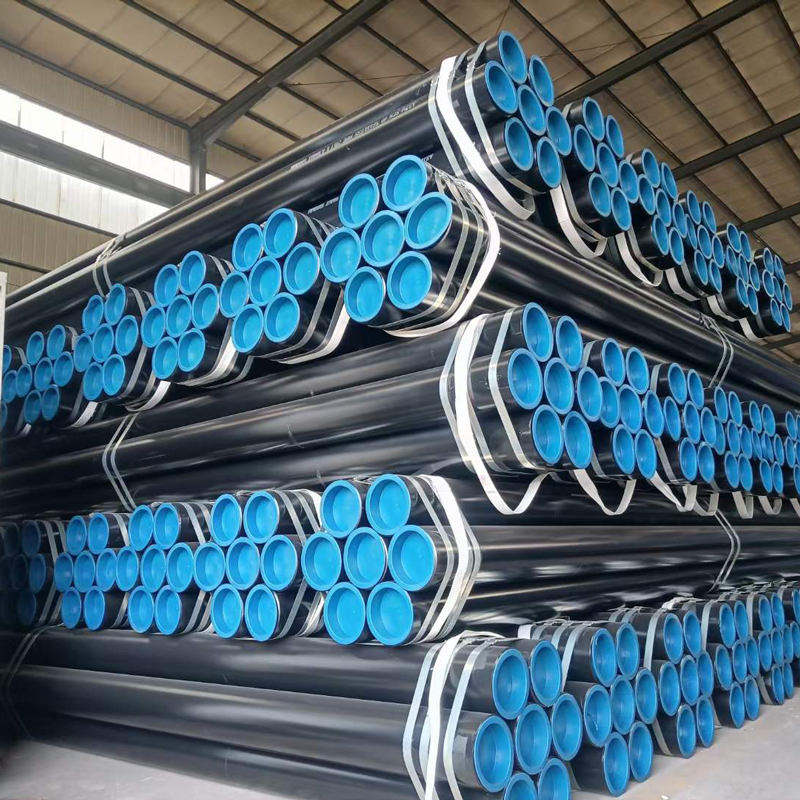
Carbon Steel Pipe vs. Seamless Pipe
As a professional steel supplier, Tianjin Baolf Steel Group fully understands the specific requirements imposed on steel pipes by various national and industry standards (such as GB, ASTM, API, and EN).
| Specification | Carbon Steel Pipe | Seamless Pipe |
|---|---|---|
| Core Material | Low-carbon steel (carbon content ≈ 0.05–0.25%) (ASTM A53 grades A/B, EN 10217/10219 series.) |
Carbon steel, alloy steel, stainless steel (API, ASTM A106, A333, EN 10216). |
| Manufacturing process | After the steel plate/steel strip is bent into shape, it undergoes high-frequency welding or submerged arc welding. | Solid steel billet is heated and perforated, then formed by hot rolling or cold drawing. |
| Pressure-bearing capacity | Suitable for low to medium pressure applications (typically ≤1.6 MPa) | Suitable for medium, high, and ultra-high voltage operating conditions (resistant to extreme temperatures and pressures) |
| Specification Range | MS Pipe offers a wide range of diameters, with large-diameter and thin-walled tubes exhibiting exceptional cost-effectiveness. | Seamless pipes exhibit significant advantages in small diameters and thick-walled configurations, whereas production of ultra-large diameters is limited. |
| Main Advantages | Low cost, short production cycle, and a wide range of large diameters available. | Free from weld defects, with uniform mechanical properties and extremely high safety reliability. |
| Typical Application | Municipal water pipelines, gas pipelines, building structures, low-pressure transmission systems | Oil and gas extraction, high-pressure boilers, hydraulic cylinders, precision mechanical processing |
| Our company supplies | Supports custom-length processing and anti-corrosion coatings (e.g., galvanized). | Supports precision cold drawing, heat treatment, and rigorous non-destructive testing. |
Procurement Recommendation: How to select the most suitable steel pipe?
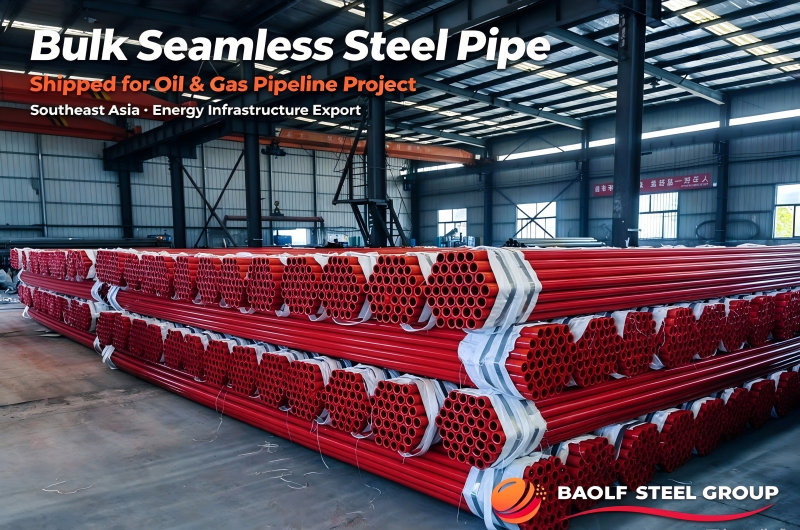
Tianjin Baolf Steel Group boasts robust supply chain integration capabilities and customized production capacity, offering comprehensive pipeline solutions that include carbon steel pipes, alloy pipes, seamless pipes, and welded pipes. If your project involves high-temperature steam, flammable or explosive fluids, or deep-sea oil and gas extraction, choose seamless steel pipes without hesitation. Although the initial procurement cost is higher, their extremely low failure rate and long service life will save you significant long-term maintenance expenses.
Carbon steel welded pipes are an excellent cost-effective choice for urban water supply systems, low-pressure gas transmission, or conventional building steel structures. They fully meet engineering requirements while significantly reducing project costs.
Whether you require large quantities of carbon steel pipes or seamless pipes, we offer products that meet international standards and deliver exceptional quality. Contact us for the latest factory quotes—we'll ensure every purchase is precise and efficient!